
Bears stadium bill stalls in Illinois House
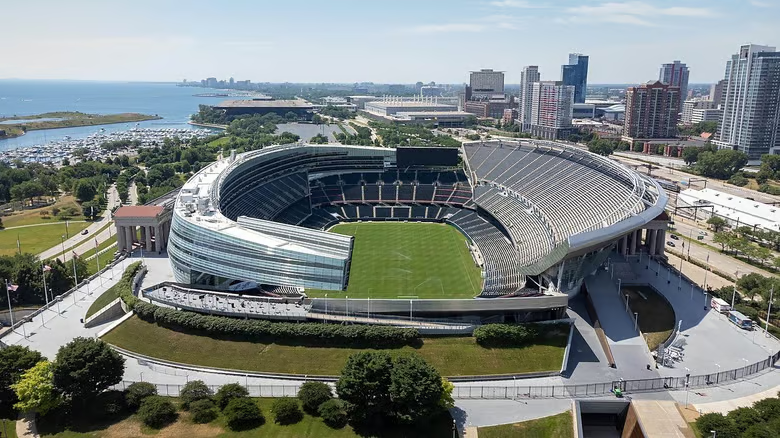
Illinois lawmakers ended the 2026 spring legislative session without approving a proposal that could have strengthened the state’s effort to keep the Chicago Bears from building a new stadium in Indiana.
State Sen. Bill Cunningham, a Chicago Democrat, introduced legislation that would allow cities in Cook County with populations above 70,000 — including Chicago and Arlington Heights — to create their own sports stadium authorities.
Under the proposal, the Bears would pay for the construction of a new stadium, with the team already committing $2 billion toward the project. The stadium would be built on publicly owned land and later transferred to a newly created sports authority, with the team paying through a stadium lease agreement.
The structure would also allow the Bears to pay taxes only on the property surrounding the stadium. In Arlington Heights, for example, the team has outlined development plans for land adjacent to the stadium site.
The Illinois Senate passed the measure early Monday by a 37-17 vote. However, the House adjourned less than an hour later without taking up the bill.
Unless Gov. JB Pritzker calls a special session, lawmakers are not scheduled to return until the fall veto session in October.
The delay leaves the Bears weighing two potential stadium sites: Arlington Heights, where the team owns 326 acres at the former Arlington International Racecourse, and Hammond, Indiana.
The Bears have never played a home game outside Illinois since the franchise began in 1920. However, Indiana recently passed legislation similar to Cunningham’s proposal in an effort to attract the team to a domed stadium project in Hammond, less than 30 miles from Chicago.
The team said it is still reviewing both options.
“We will finalize our evaluation of both Arlington Heights and Hammond and remain on the late spring/early summer timeline that we have previously communicated,” the Bears said in a statement. “We will provide an update when we have a decision to share.”
The stalled legislation adds uncertainty to one of the most closely watched stadium decisions in professional sports, as Illinois and Indiana compete for the future home of one of the NFL’s oldest franchises.