
Brandon Johnson Launches Chicago Reelection Bid
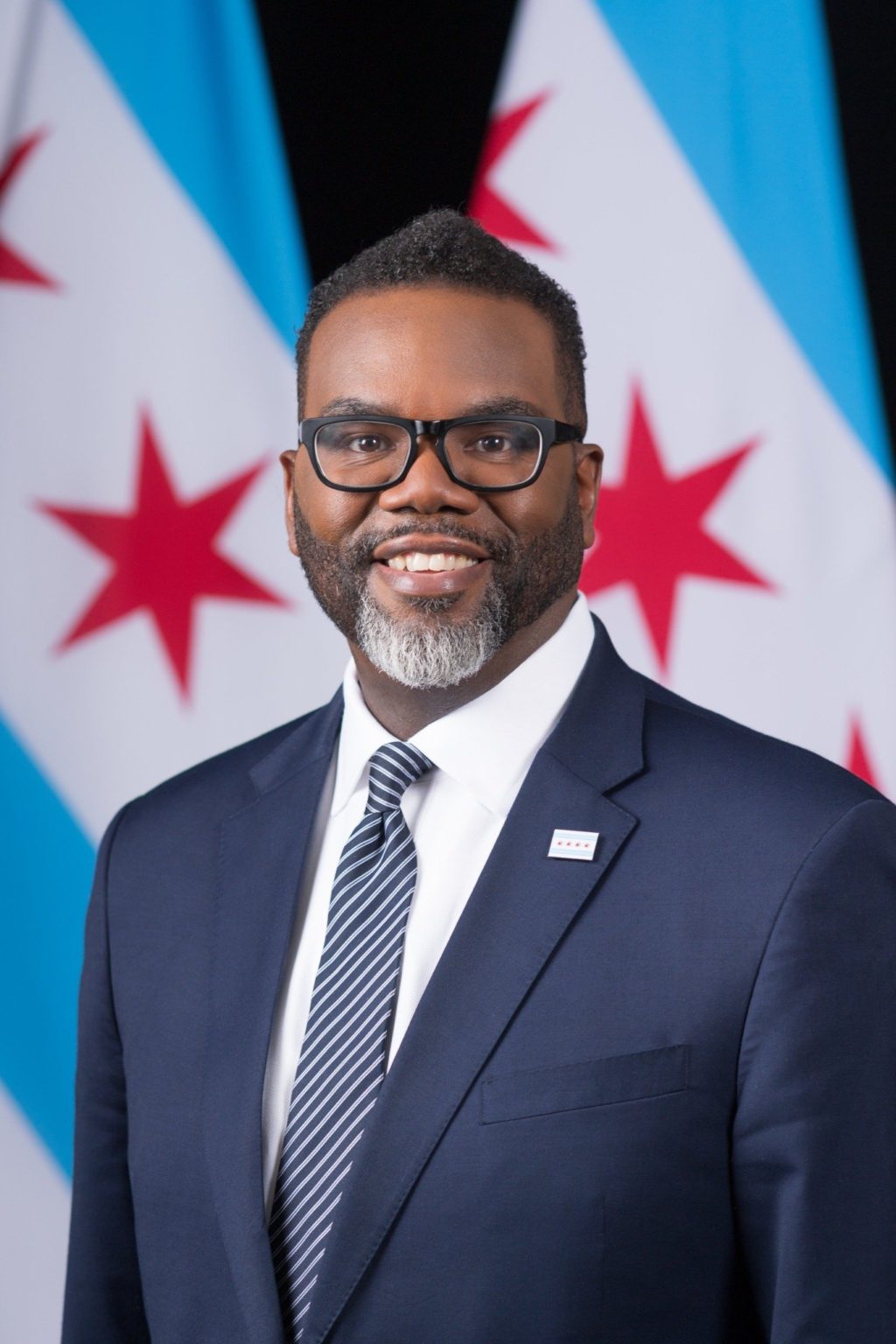
Chicago Mayor Brandon Johnson announced Sept. 15 that he will seek a second term, launching a reelection campaign centered on affordability, public safety, and support for working families.
Johnson said he is “the only candidate who’s fighting for working families” and pledged to work toward a “safer and more affordable Chicago.”
During his first term, Johnson has emphasized housing, education, mental health services, transportation, environmental programs, arts initiatives, and guaranteed-income programs. His administration has also faced continuing fiscal pressure, with Chicago projected to confront an $882.4 million budget deficit in 2027, according to Chicago City Wire.
Johnson campaigned previously against property-tax increases. He has since left that option open while continuing to advocate for what he describes as “progressive revenue.” His campaign says residents should not be priced out of one of the world’s wealthiest cities and pledges to “make the wealthy pay their fair share.”
His earlier fiscal platform called for roughly $1 billion in additional annual investment in areas including housing, health care, mental health, child care and education while also seeking to stabilize the city’s finances.
Public safety has also remained a central part of Johnson’s agenda. His approach has focused on addressing underlying causes of violence through investment in schools, social services and violence-prevention programs, alongside traditional law-enforcement measures. His proposals have included an Office of Community Safety and shifting some emergency responses involving mental-health crises to trained professionals rather than armed police officers.
Chicago’s homicide totals have declined significantly from the levels recorded during the pandemic years.
In education, Johnson has supported expanding staffing in Chicago schools, including more librarians and clinicians. Chicago Public Schools entered its fiscal 2027 budget process with a reported $732.5 million deficit before approving a balanced budget, while carrying more than $9 billion in outstanding debt.
Johnson’s policy agenda also includes expanding affordable housing and mental-health services, increasing assistance for immigrants, subsidizing public transportation, reducing or eliminating fares for some riders, municipal sidewalk snow removal, additional bike infrastructure, car-free areas, environmental initiatives, and expanded guaranteed-income programs.