
Chicago violence renews debate over public safety
Chicago experienced a violent and chaotic Memorial Day weekend as multiple shootings, large public disturbances, and property damage incidents renewed debate over the city’s public safety strategy.
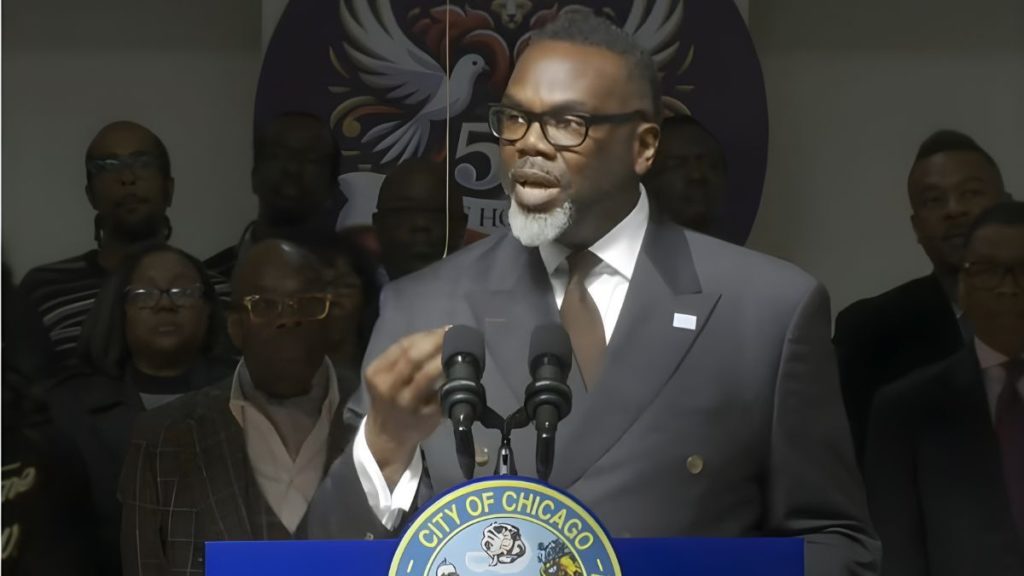
The unrest unfolded shortly after Mayor Brandon Johnson introduced his Summer Safety Strategy, a plan centered on youth engagement programs, violence interrupters, neighborhood investments, and efforts to combat gender-based violence. Critics noted that the proposal did not include additional penalties or enforcement measures targeting criminal offenders.
One of the largest disturbances occurred Saturday evening on the Near West Side, where crowds estimated at more than 500 people gathered. Multiple fights reportedly broke out, vehicles were damaged, and a car struck five police officers responding to the scene.
Nearby, a 17-year-old boy was shot in the head near Randolph Street and Hoyne Avenue. In another incident in the Little Village neighborhood, four teenagers were injured in a mass shooting.
The weekend’s violence has intensified criticism over how city leaders are handling recurring public disorder events commonly described as “teen takeovers” and street gatherings.
Some critics argue the incidents are becoming more frequent and more disruptive because offenders often face limited legal consequences, even after arrests are made.
The debate has also revived discussion surrounding a previously proposed nuisance ordinance championed by Alderman Anthony Napolitano. The measure sought to address lower-level offenses, such as reckless street gatherings, property damage, and vehicle takeovers, by allowing authorities to impose fines and impound vehicles associated with disruptive activity.
The proposal stalled during former Mayor Lori Lightfoot’s administration and never advanced beyond committee review.
Supporters of the ordinance argue it would give police additional tools to respond to disorder before situations escalate into violence. Some proposals also included financial accountability measures for parents whose children are repeatedly involved in criminal activity or truancy.
Critics of the city’s current approach have compared the response to public disorder with Chicago’s aggressive traffic enforcement policies, arguing that violations tied to reckless driving or street blockades often receive less attention than revenue-generating traffic tickets.
The broader debate now centers on whether restoring stronger consequences for lower-level offenses could help reduce violent crime and repeated public disturbances without relying on large-scale incarceration policies.
As summer approaches, public safety is expected to remain a major political issue across Chicago, particularly as residents continue expressing concerns over violence, property damage, and disorder in several neighborhoods throughout the city.