
Feds Urge States to Remove Political Symbols From Roads
U.S. Transportation Secretary Sean Duffy has urged all 50 state governors, along with the
governors of Puerto Rico and the mayor of Washington, D.C., to eliminate political symbols and
artwork from roads, citing safety concerns and the need for uniformity.
governors of Puerto Rico and the mayor of Washington, D.C., to eliminate political symbols and
artwork from roads, citing safety concerns and the need for uniformity.
In a letter sent on July 1, Duffy called for full compliance with the Federal Highway
Administration’s SAFE ROADS initiative (Safe Arterials for Everyone through Reliable
Operations and Distraction-Reducing Strategies). The program focuses on improving safety on
non-freeway arterial roads, especially at intersections and crosswalks.
“Roads are for safety, not political messages or artwork,” Duffy said in an official statement.
“Today, I am calling on governors in every state to ensure that roadways, intersections, and
crosswalks are kept free of distractions.”
Duffy highlighted the alarming statistic that 39,345 people died in roadway incidents in 2024.
Although this represents a 3.8% decrease from the previous year, he emphasized that traffic
fatalities remain too high.
His letter stresses the importance of consistent and recognizable road markings and the removal
of any visual clutter that might interfere with driver, pedestrian, or automated vehicle navigation.
States are being asked to work with local transportation departments and planning organizations
to identify and address high-risk road segments and intersections by the end of Fiscal Year 2026.
Each state is expected to submit a prioritized list of problematic areas to its Federal Highway
Administration division within 60 days. Fiscal Year 2026 begins October 1, 2025.
Each state is expected to submit a prioritized list of problematic areas to its Federal Highway
Administration division within 60 days. Fiscal Year 2026 begins October 1, 2025.
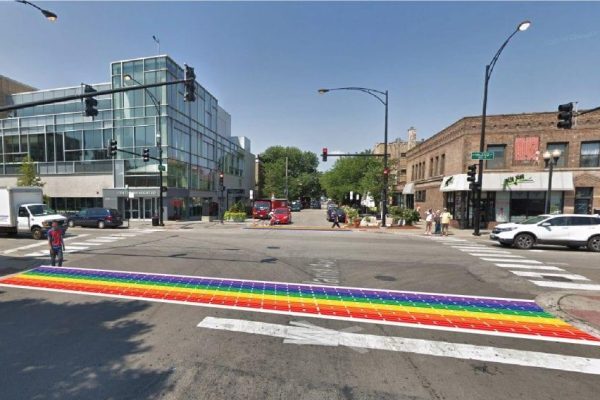
If widely implemented, this directive would impact visible activist messages that have appeared
on U.S. streets in recent years. Examples include rainbow-colored crosswalks celebrating
LGBTQ+ pride in cities like Milwaukee and Key West, as well as past road markings associated
with Black Lives Matter.
Rainbow crosswalks have been installed in multiple states, including California, Illinois, New
York, and Washington. For instance, Milwaukee repainted a rainbow intersection last month to
honor the 1989 Pride March, while Key West permanently marked four rainbow crossings in its
entertainment district in 2020.
Duffy’s call signals a shift in federal transportation policy that prioritizes roadway clarity and
aims to standardize public space usage, separating safety measures from sociopolitical
expression.

Related Posts