
Jigzibik Project Breaks Ground on 45 Affordable Homes
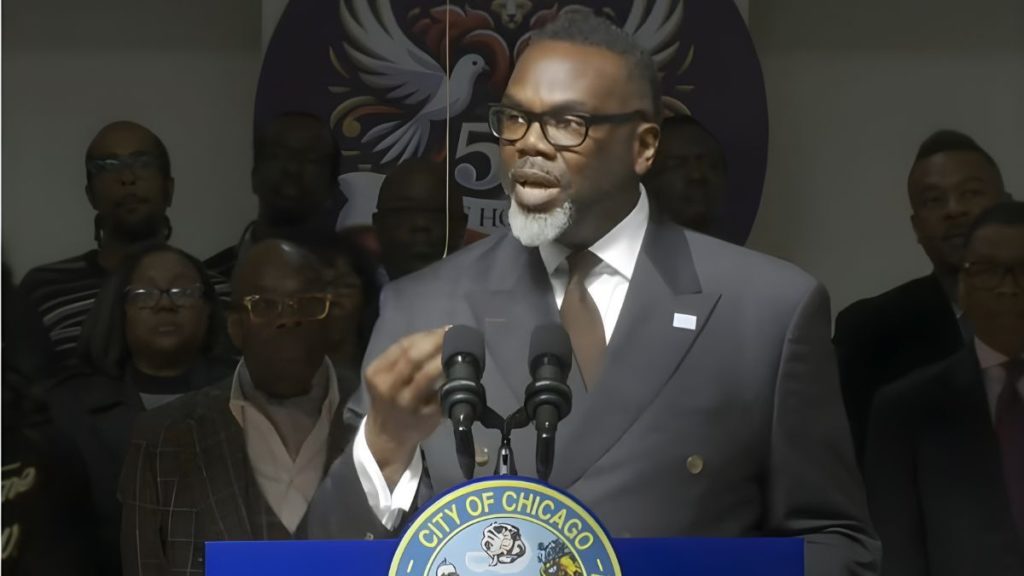
Mayor Brandon Johnson joined city officials, Indigenous leaders, and housing advocates for the groundbreaking of the Jigzibik affordable housing complex on Chicago’s Northwest Side. The project, which will bring 45 units of fully affordable housing to the 33rd Ward, reflects years of planning, collaboration, and community input.
Representatives from Full Circle Communities, Visionary Ventures, the American Indian Center, and the Chicago American Indian Community Collaborative were present alongside Alderwoman Rossana Rodriguez-Sanchez and members of the Native American Advisory Council.
Mayor Johnson used the occasion to reflect on the city’s roots: “I often talk about the love story of the founding of our city between a Haitian immigrant and an indigenous Potawatomi woman named Kitihawa. The history of Chicago is deeply intertwined with our indigenous communities who called this land home long before our city was established,” he said. He emphasized the city’s commitment to ensuring Indigenous communities can continue to live and thrive in Chicago.
Alderwoman Rodriguez-Sanchez echoed those sentiments, stating, “In the 33rd Ward, we know that housing is a human right, not a privilege. Today we take a major step forward in building a city where working families can not only feel secure but thrive.” She noted the project’s significance in honoring and uplifting Native communities.
Joshua Wilmoth of Full Circle Communities thanked partners for their involvement, while Shelly Tucciarelli of Visionary Ventures called the groundbreaking “a dream come true.”
The development, named “Jigzibik” — Potawatomi for “at the river’s edge” — reflects cultural input from Native American leaders. It will include access to supportive resources such as the American Indian Center and the American Indian Health Service of Chicago.
Chicago is home to one of the largest urban Native populations in the U.S., with representation from over 100 tribes. The project has received $6 million in funding from Mayor Johnson’s Housing and Economic Development Bond, as well as additional city and private sources.
Lissette Castañeda from the Department of Housing highlighted the depth of cooperation behind the effort. “This project is a result of years of dedicated collaboration,” she said, reaffirming the city’s commitment to expanding access to safe and affordable housing.
Once completed, the complex will feature a mix of unit sizes and amenities including green spaces, a rooftop deck, a fitness room, and street-level commercial areas. It will replace a long-vacant lot near the intersection of N. Richmond Street and N. Francisco Avenue.