
TSA Ends Shoe Removal Rule at U.S. Airports
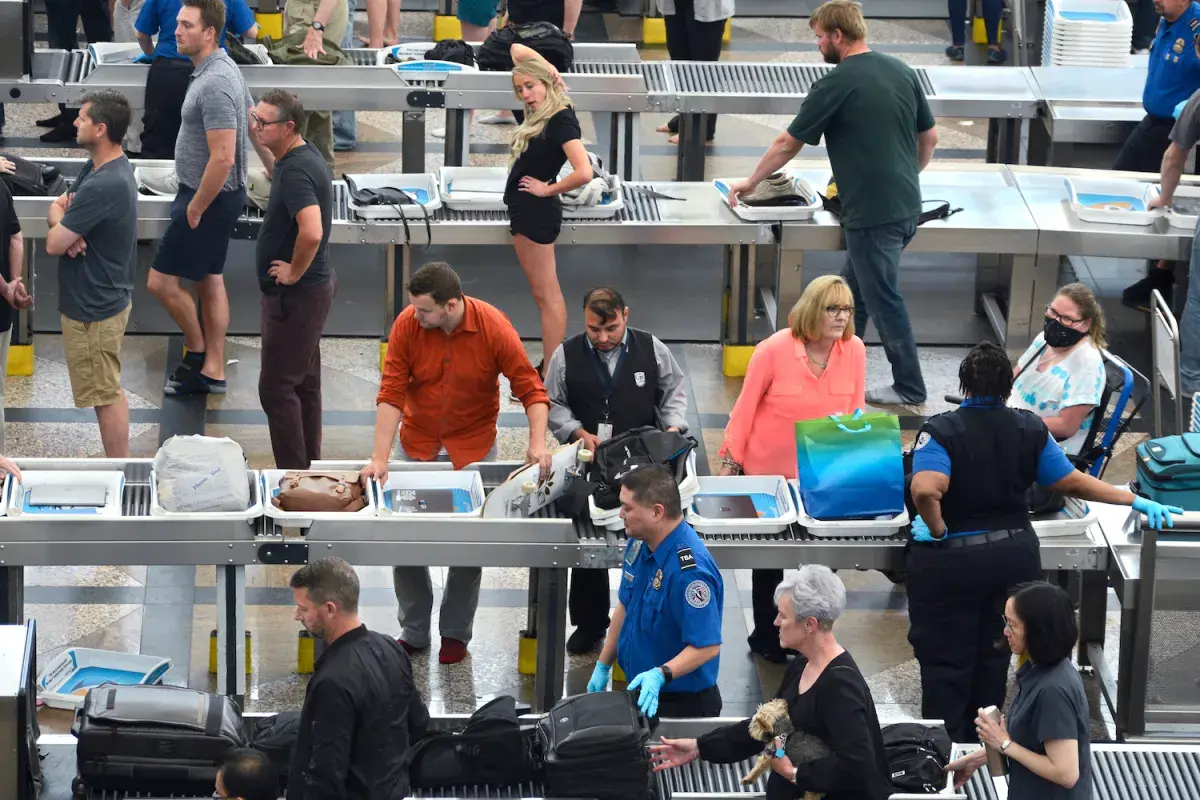
For the first time in nearly two decades, air travelers in the United States can keep their shoes on during airport security screenings. The Department of Homeland Security (DHS) announced a policy shift on July 8 that eliminates the long-standing requirement for passengers to remove footwear before passing through Transportation Security Administration (TSA) checkpoints.
Secretary of Homeland Security Kristi Noem said the change takes effect immediately following the success of a pilot program that demonstrated current technology’s ability to detect concealed threats without requiring passengers to take off their shoes.
“While shoe removal will no longer be standard procedure, travelers may still be asked to remove their shoes if additional screening is deemed necessary,” Noem clarified.
The shoe removal policy was enacted in 2006, prompted by the 2001 attempted bombing by Richard Reid, known as the “shoe bomber,” who tried to ignite explosives hidden in his footwear aboard a transatlantic flight. Since then, passengers between the ages of 12 and 75 have been routinely required to remove their shoes during screening.
While members of TSA PreCheck—a program offering expedited screening for a five-year, $80 fee—have long been exempt from shoe removal and other requirements like removing belts or laptops, this new policy extends that convenience to all travelers. TSA was created in the aftermath of the September 11 attacks when President George W. Bush signed legislation federalizing airport security. Since then, the agency has introduced various technologies intended to enhance safety while minimizing traveler inconvenience, including facial recognition tools and ongoing Real ID enforcement efforts.
Despite these advancements, TSA procedures continue to generate frustration among passengers. According to former Transportation Secretary Sean Duffy, the TSA remains one of the top sources of complaints in the travel industry.
“It’s clear that TSA is the #1 travel complaint,” Duffy posted on X (formerly Twitter). “That falls under the Department of Homeland Security. I’ll discuss this with @Sec_Noem.”
Earlier this year, former President Donald Trump removed TSA Administrator David Pekoske, who President Joe Biden had previously reappointed. TSA’s website currently lists the administrator position as vacant, and no official reason was provided for the dismissal.
For now, the latest decision by DHS marks a significant shift toward streamlined travel, balancing security with convenience as the agency continues to refine its screening protocols.