
Art Institute to Honor Elizabeth Catlett’s Legacy
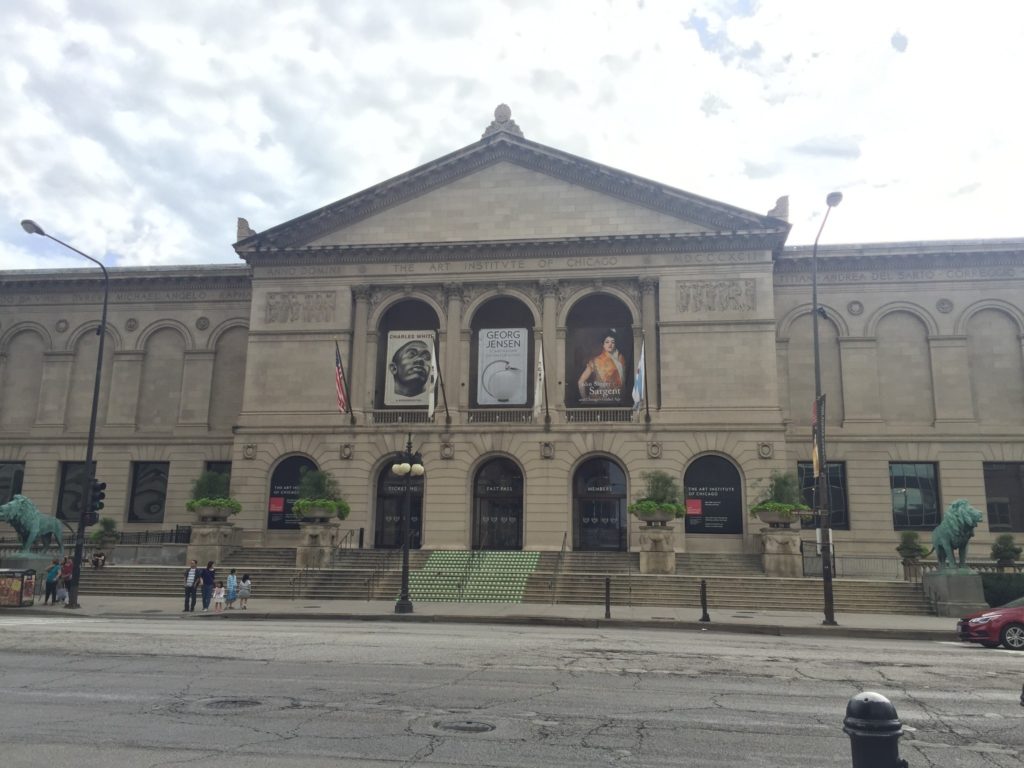
The Art Institute of Chicago will host a landmark retrospective on acclaimed artist Elizabeth Catlett, titled “A Black Revolutionary Artist and All That It Implies.” Running from August 30, 2025, through January 4, 2026, the exhibition will feature more than 100 pieces spanning Catlett’s influential career as a sculptor and printmaker.
Widely regarded as a pioneering figure in American art, Catlett used her work to explore themes of social justice, race, gender, and class inequality. Born in Washington, D.C., during the Great Depression, she confronted the realities of poverty and racial violence early in life. These experiences, paired with her formal education in modern art, informed a lifelong commitment to activism through creative expression.
After spending time in Chicago, where she engaged with other prominent Black artists such as Margaret Burroughs and Charles White, Catlett relocated to Mexico in 1946. There, she deepened her artistic practice and political engagement, creating works that remain deeply resonant today.
“As visitors go through the show, they will see how Catlett employed specific media in a way that seamlessly ties her art with her activism,” said Sarah Kelly Oehler, the Art Institute’s curator of Arts of the Americas and vice president of Curatorial Strategy. “She harnessed her printmaking to communicate deliberate messages, while her sculptures are often more universal in meaning and beautifully convey her exceptional command of three-dimensional form.”
The retrospective is a collaborative effort by the Brooklyn Museum, the National Gallery of Art, and the Art Institute of Chicago. It was jointly organized by curators Dalila Scruggs (Smithsonian American Art Museum), Catherine Morris (Brooklyn Museum), Mary Lee Corlett and Rashieda Witter (formerly of the National Gallery of Art), Carla Forbes (also of the Brooklyn Museum), and Sarah Kelly Oehler.
The exhibition has received funding from the Terra Foundation for American Art and the Henry Luce Foundation. Its Chicago presentation is further supported by the Walter and Karla Goldschmidt Foundation, Elisabeth and William Landes, and Dr. Peggy A. Montes.
The Art Institute’s broader programming, including this exhibition, benefits from ongoing leadership support provided by members of the Luminary Trust, including Karen Gray-Krehbiel and John Krehbiel Jr., Kenneth C. Griffin, Josef and Margot Lakonishok, Liz and Eric Lefkofsky, Ann and Samuel Mencoff, Sylvia Neil and Dan Fischel, Cari and Michael Sacks, and the Earl and Brenda Shapiro Foundation.
This major exhibition promises to offer a powerful look into the life and legacy of a revolutionary artist whose work continues to inspire.