Flight Delays Deepen Nationwide Amid Ongoing Shutdown
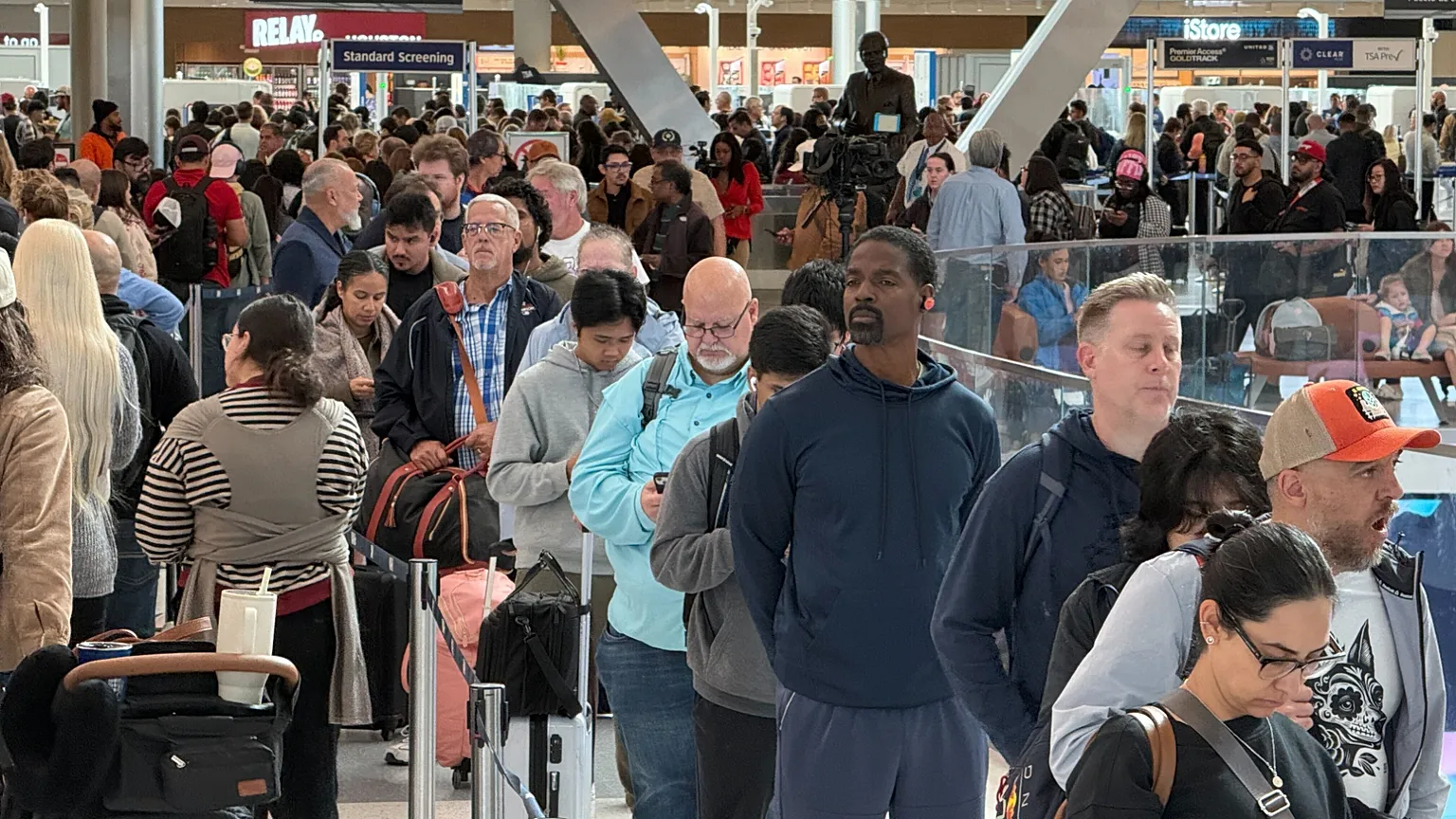
Flight disruptions are worsening across the United States as the federal government shutdown enters its second month, further straining an already stretched network of air traffic controllers. The growing shortage has caused significant slowdowns at airports nationwide, grounding thousands of travelers and disrupting airline operations.
According to federal aviation data, Newark Liberty International Airport in New Jersey has faced some of the longest delays, averaging two to three hours. The congestion quickly rippled through the New York metropolitan area, forcing airlines to adjust gate assignments, delay departures, and reroute passengers.
The New York City Emergency Management Office urged caution for travelers on Sunday, posting on X: “Travelers flying to, from, or through New York should expect schedule changes, gate holds, and missed connections. Anyone flying today should check flight status before heading to the airport and expect longer waits.”
Other major hubs, including George Bush Intercontinental Airport in Houston, Dallas-Fort Worth International, and Chicago O’Hare, also reported extensive delays and cancellations. Airports in San Francisco, Los Angeles, Denver, and Miami faced similar backlogs, according to flight-tracking website FlightAware.
By November 2, federal data showed 4,295 flights delayed and 557 canceled within, into, or out of the United States. While not all disruptions were directly tied to staffing shortages, aviation officials warned that the problem is being compounded by the ongoing shutdown. Before it began, about 69 percent of U.S. flights were on time, and only 2.5 percent were canceled.
Transportation Secretary Sean Duffy said the situation will likely worsen if the shutdown continues and federal employees remain unpaid. Nearly 13,000 air traffic controllers have gone weeks without pay, according to the Federal Aviation Administration (FAA).
“We work overtime to make sure the system is safe. And we will slow traffic down—you’ll see delays, we’ll have flights canceled—to make sure the system is safe,” Duffy said during an interview on CBS’s Face the Nation.
He emphasized that he would not dismiss controllers who fail to report for work under these conditions: “When they’re making decisions to feed their families, I’m not going to fire air traffic controllers. They need support, they need money, they need a paycheck. They don’t need to be fired.”
Earlier in October, Duffy had issued a stronger warning to controllers calling in sick rather than working unpaid, suggesting they risked termination. But as the crisis deepens, his tone has softened to one of empathy and concern.
The FAA has long faced chronic staffing issues, with about 3,000 fewer air traffic controllers than needed even before the shutdown. Retirements have outpaced the rate of training new personnel, leaving the system vulnerable to disruptions. The prolonged shutdown has now exacerbated the shortage—threatening not only travel efficiency but also the resilience of the nation’s airspace system.