United-American merger plan raises antitrust concerns
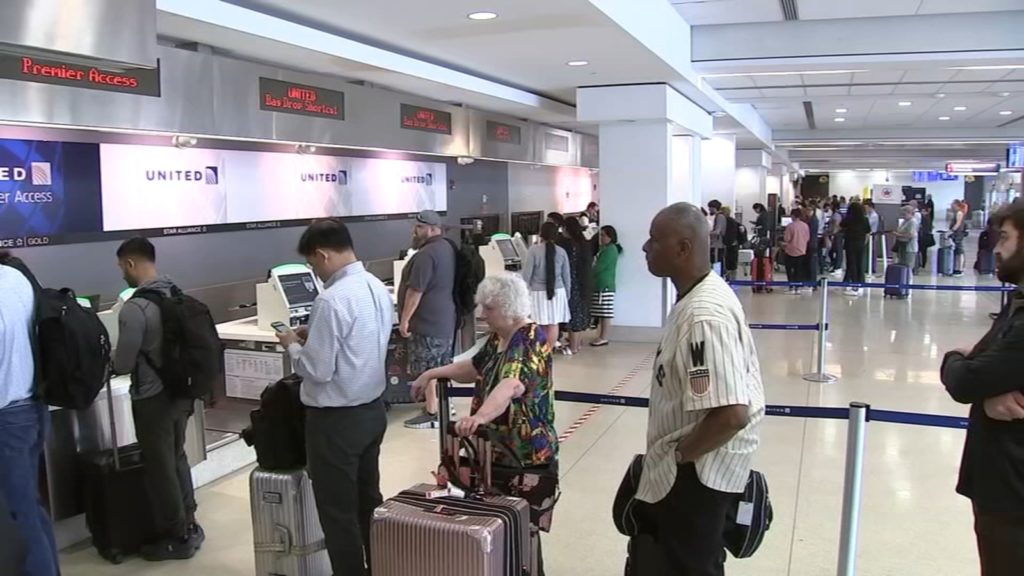
A potential merger between United Airlines and American Airlines is drawing early scrutiny from regulators and analysts, who warn the deal could significantly reshape the U.S. aviation industry — while raising fares and limiting competition.
The proposal, reportedly pitched by United CEO Scott Kirby to President Donald Trump in late February, would combine two of the nation’s largest carriers into a single entity, creating one of the biggest airline groups in the world.
Though details remain limited, the prospect has already triggered concerns among antitrust experts and policymakers. William Kovacic, director of the competition law center at George Washington University, questioned the feasibility of the deal, stating, “This seems hopeless to me. There are huge overlaps on several routes and in various metropolitan areas (such as Chicago). No amount of divestitures would fix it.”
Markets initially reacted positively to the news. Shares of American Airlines jumped about 7% in morning trading, while United rose roughly 2%. Other carriers also gained, with JetBlue climbing 9%, Alaska Air up 7%, and both Southwest and Delta advancing around 6%, supported in part by lower crude oil prices.
Analysts suggested investors see the potential merger as a boost for American Airlines, which has faced ongoing profitability and cost challenges. TD Cowen analyst Tom Fitzgerald noted: “In terms of valuation, we imagine American would anchor to their unencumbered asset base of over US$14 billion and argue for a valuation over $20/share, though (we) wonder if that is realistic, given how much their leverage would alter United’s risk profile.”
A valuation of $20 per share would represent a premium of roughly 78% over American’s recent closing price.
Still, the regulatory path forward is expected to be difficult. U.S. antitrust authorities, state governments, and even private litigants could challenge the deal. In recent years, states have taken a more active role in blocking mergers, adding another layer of complexity.
Concerns center on market concentration. Before any required divestitures, a combined United-American airline would control at least 50% of domestic capacity at 159 airports, underscoring the scale of consolidation.
Antitrust lawyer Andre Barlow of DBM Law Group warned of broader implications: “A United-American deal would reduce the ‘Big 4’ to a ‘Big 3’ with one dominant player. There would likely be competitive issues in many city-pair routes and hubs.”
He also raised doubts about approval prospects, adding: “I am not sure this deal can get done. The Trump administration is concerned about affordability issues, and this deal would reduce choices and give the airlines more pricing power, which means higher fees for consumers, so I would think this would get a rigorous review.”
The airline sector has already seen significant consolidation over the past two decades. However, recent attempts — including JetBlue’s proposed acquisition of Spirit Airlines — have been blocked by regulators, signaling a tougher stance on large deals.
Lawmakers and consumer advocates have increasingly voiced concerns about rising ticket prices and reduced competition, arguing that major carriers have grown less aggressive on pricing.
Industry representatives, however, point to efficiency gains. Airlines for America has argued that consolidation has helped lower costs and improve connectivity, citing data showing ticket prices fell 1.5% between 2019 and 2024 even as broader consumer prices rose 23%.
The timing of the proposal adds further complexity. Airline stocks have been under pressure due to rising fuel costs linked to the Iran conflict. Since late February, shares of American Airlines have declined 14.1%, while United has dropped 10.4%.
Executives have warned that sustained high fuel prices could strain margins and limit growth, particularly for weaker carriers.
Kirby first raised the merger idea during a February 25 meeting at the White House, held at Washington Dulles International Airport. He argued that a combined airline would be better positioned to compete globally, especially against foreign carriers that dominate long-haul routes despite strong demand from U.S. travelers.
Despite that rationale, industry observers say the scale of the proposed deal — and its potential impact on pricing, competition, and employment — ensures it would face intense scrutiny before any approval.